


29-12-2010, 02:48 PM
Her er lidt mere information om uret+ flere billeder nederst:
Proveniens: Givet til kommandør af dannebrogsordenen, direktør og bestyrelsesformand i ØK Tage Wøldike Schmith af B&W i 1978.
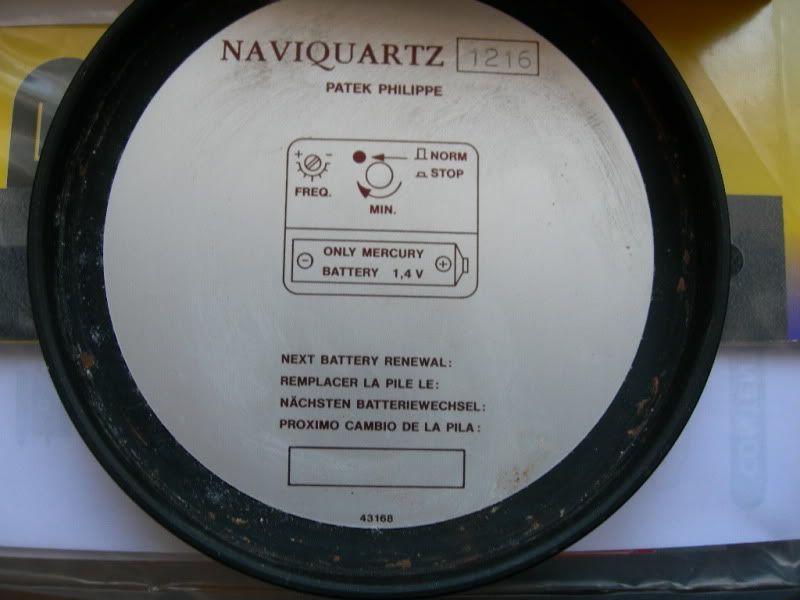
Ref: 1216
Cal 33
Serienummer: 1.802.430
Specifikationer (på engelsk):
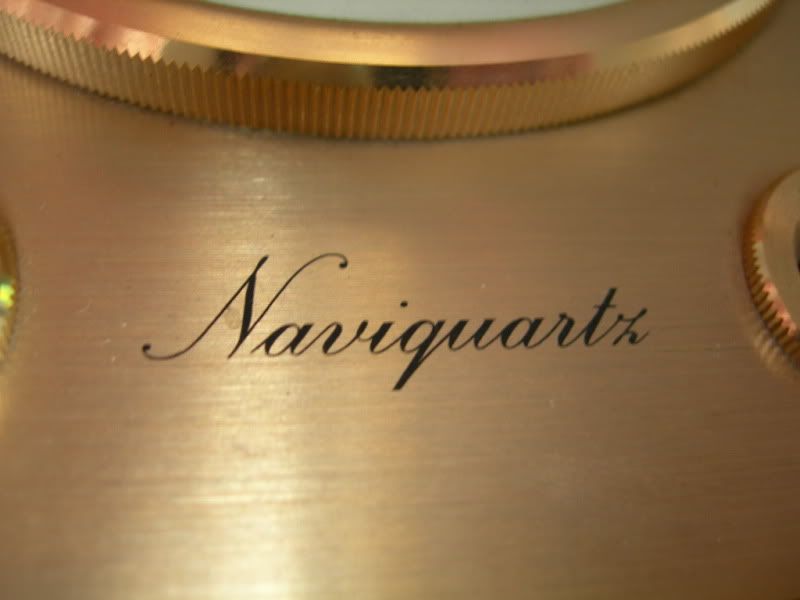
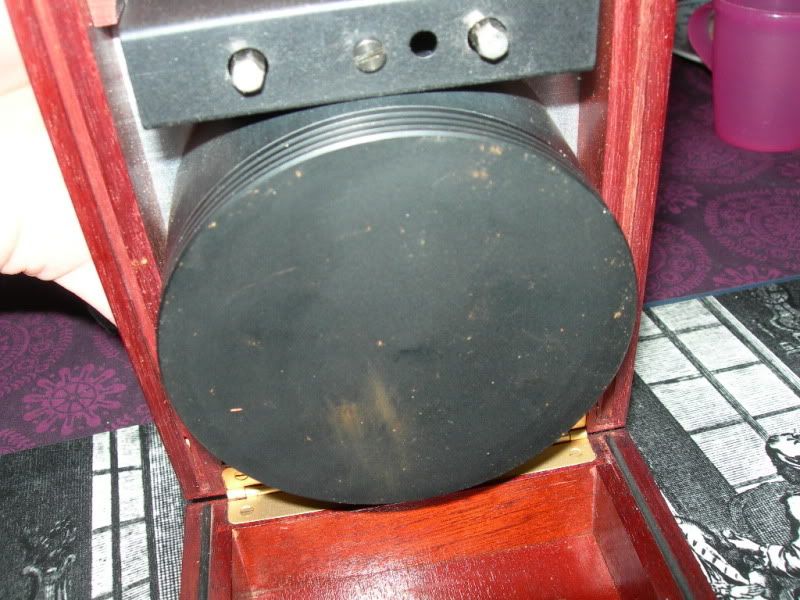
Naviquartz Chronometer Patek Philippe, Genève. Made circa 1977. Very fine, "Naviquartz III", mahogany quartz chronometer with center-seconds, stop-feature and battery power-reserve indicator.
Three-tier, hinged, corners and sides reinforced by brass inlays in the tradition of marine chronometers, the interior of the lid with applied vacant brass plaque, bottom with folding brass stand. White with bold radial Roman numerals, outer minute track, below on the brushed brass dial plate 2 apertures, right for pushbutton activating power-reserve indication, left for the indicator. Black Breguet hands. M. With quartz standardization, electronic, hack-mechanism for stopping for precision setting. Dial and movement signed. Dim. 16 x 12.5 x 7.8 cm
Historie (på engelsk):
An especially interesting construction characterized the Chronotomequartz table-clock (Ref. 1000 E), which Patek Philippe’s engineers developedin the course of four years of work under the direction of physicist André Krassoievitch. This clock’s comparatively small volume (about 300cubic centimeters) sufficed to house a quartz oscillator, electronic circuitry,
a conventional time display, and a battery that had to be plugged
into a wall socket and recharged every 200 hours. The oscillator includeda temperature-stabilized quartz resonator that vibrated at a frequencyof 10,000 hertz. An analog switching device used eight transistors tostep down this speedy frequency by a factor of 600, to 16? hertz. (Integrated circuits for clockworks hadn’t been invented yet.) The starting signal for the dividing circuit underwent amplification and was then relayed to a
specially constructed synchronous motor, which turned conventional wheels and pinions that propelled the hour hand, minute hand, and seconds hand. The power required was quite minimal: a mere 30 milliwatts. This innovative table clock received
the U.S. Award for Miniaturization in 1958.
This clock served as the basis for the development of Patek Philippe’s Naviquartz II marine chronometer (Ref. 1202). When it debuted in 1961, this highly accurate timekeeper was equipped with a 16-kilohertz quartz resonator and a digital, integrated,
dividing circuit. The prototype won first prize at
Neuchâtel Observatory in 1961. The resonator frequency was doubled to 32 kilohertz inside the Naviquartz III model, which was also equipped with a mercury-oxide battery that stored enough energy to keep the clock running for an entire year. Available either with or without a teakwood cabinet and gold-plated brass fittings, these marinechronometers were equally well suited for service as desktop clocks on dry land.





Proveniens: Givet til kommandør af dannebrogsordenen, direktør og bestyrelsesformand i ØK Tage Wøldike Schmith af B&W i 1978.
Ref: 1216
Cal 33
Serienummer: 1.802.430
Specifikationer (på engelsk):
Naviquartz Chronometer Patek Philippe, Genève. Made circa 1977. Very fine, "Naviquartz III", mahogany quartz chronometer with center-seconds, stop-feature and battery power-reserve indicator.
Three-tier, hinged, corners and sides reinforced by brass inlays in the tradition of marine chronometers, the interior of the lid with applied vacant brass plaque, bottom with folding brass stand. White with bold radial Roman numerals, outer minute track, below on the brushed brass dial plate 2 apertures, right for pushbutton activating power-reserve indication, left for the indicator. Black Breguet hands. M. With quartz standardization, electronic, hack-mechanism for stopping for precision setting. Dial and movement signed. Dim. 16 x 12.5 x 7.8 cm
Historie (på engelsk):
An especially interesting construction characterized the Chronotomequartz table-clock (Ref. 1000 E), which Patek Philippe’s engineers developedin the course of four years of work under the direction of physicist André Krassoievitch. This clock’s comparatively small volume (about 300cubic centimeters) sufficed to house a quartz oscillator, electronic circuitry,
a conventional time display, and a battery that had to be plugged
into a wall socket and recharged every 200 hours. The oscillator includeda temperature-stabilized quartz resonator that vibrated at a frequencyof 10,000 hertz. An analog switching device used eight transistors tostep down this speedy frequency by a factor of 600, to 16? hertz. (Integrated circuits for clockworks hadn’t been invented yet.) The starting signal for the dividing circuit underwent amplification and was then relayed to a
specially constructed synchronous motor, which turned conventional wheels and pinions that propelled the hour hand, minute hand, and seconds hand. The power required was quite minimal: a mere 30 milliwatts. This innovative table clock received
the U.S. Award for Miniaturization in 1958.
This clock served as the basis for the development of Patek Philippe’s Naviquartz II marine chronometer (Ref. 1202). When it debuted in 1961, this highly accurate timekeeper was equipped with a 16-kilohertz quartz resonator and a digital, integrated,
dividing circuit. The prototype won first prize at
Neuchâtel Observatory in 1961. The resonator frequency was doubled to 32 kilohertz inside the Naviquartz III model, which was also equipped with a mercury-oxide battery that stored enough energy to keep the clock running for an entire year. Available either with or without a teakwood cabinet and gold-plated brass fittings, these marinechronometers were equally well suited for service as desktop clocks on dry land.
![[-]](https://urdebatten.dk/images/collapse.png)